
If you are buying a new machine from that brand's own dealer, the manufacturer's finance arm will usually win the deal. Used, private-sale and mixed-brand equipment is a different market, and it is where shopping lenders pays off.
Used equipment financing works much like financing new equipment: a lender pays for the machine, you repay over a set term, and the equipment secures the loan or lease. The difference is risk. A used machine has a shorter remaining life, an uncertain history and a value that depends on who you ask. Lenders price and structure for that, and they differ a lot in how far they will go.
This guide covers what lenders check on a used machine, how terms change as equipment gets older, what to do on a private sale, and the order of steps that keeps a good deal from falling apart before it funds.
Can you finance used equipment?
Yes. Excavators, loaders, skid steers, trucks and trailers, farm equipment, manufacturing and restaurant equipment are all regularly financed used, from dealers and from private sellers. What changes is the structure. Compared with a new machine, a used one typically comes with:
- A shorter term, because the lender wants the loan paid down well before the machine reaches the end of its useful life.
- A lower advance, meaning a larger down payment, especially on older or high-hour machines.
- More paperwork on the machine itself: serial number, hours, condition and proof that the seller owns it free and clear.
None of that makes used equipment hard to finance. It means the details of the specific machine matter as much as your credit.
What lenders check on a used machine
Age, measured at the end of the term
There is no universal age limit in Canada. Each lender sets its own, and many look at how old the machine will be when the last payment is made, not how old it is today. A ten-year-old excavator on a three-year term may be fine with a lender that would refuse it on a five-year term. Ask about age limits before you commit to a machine.
Hours and condition
Hours often matter as much as age. A low-hour older machine can be a better risk than a younger one that has worked every day. Service records help even if they are incomplete, and documented rebuilds (what was done, by whom, when and for how much) can make an older unit financeable.
Value, not price
Lenders lend against what the machine is worth on the open market today, not what you agreed to pay. They compare similar listings and recent auction results, and on larger or unusual items they may order an appraisal. If your price is above market, expect a larger down payment or a request to justify it.
How easy it would be to resell
Common machines with deep resale markets, such as standard excavators, wheel loaders and skid steers, get better treatment than specialized or niche equipment, because the lender knows it can recover its money if it has to.
The seller
Dealers usually provide clean title documents and service history, and sometimes a warranty, which speeds things up. Private sales are very financeable but need extra checks, covered below.
You and your business
Credit, time in business, cash flow and down payment still drive the decision. A strong borrower can finance an older machine on better terms. A newer business may need a larger down payment or a guarantor.
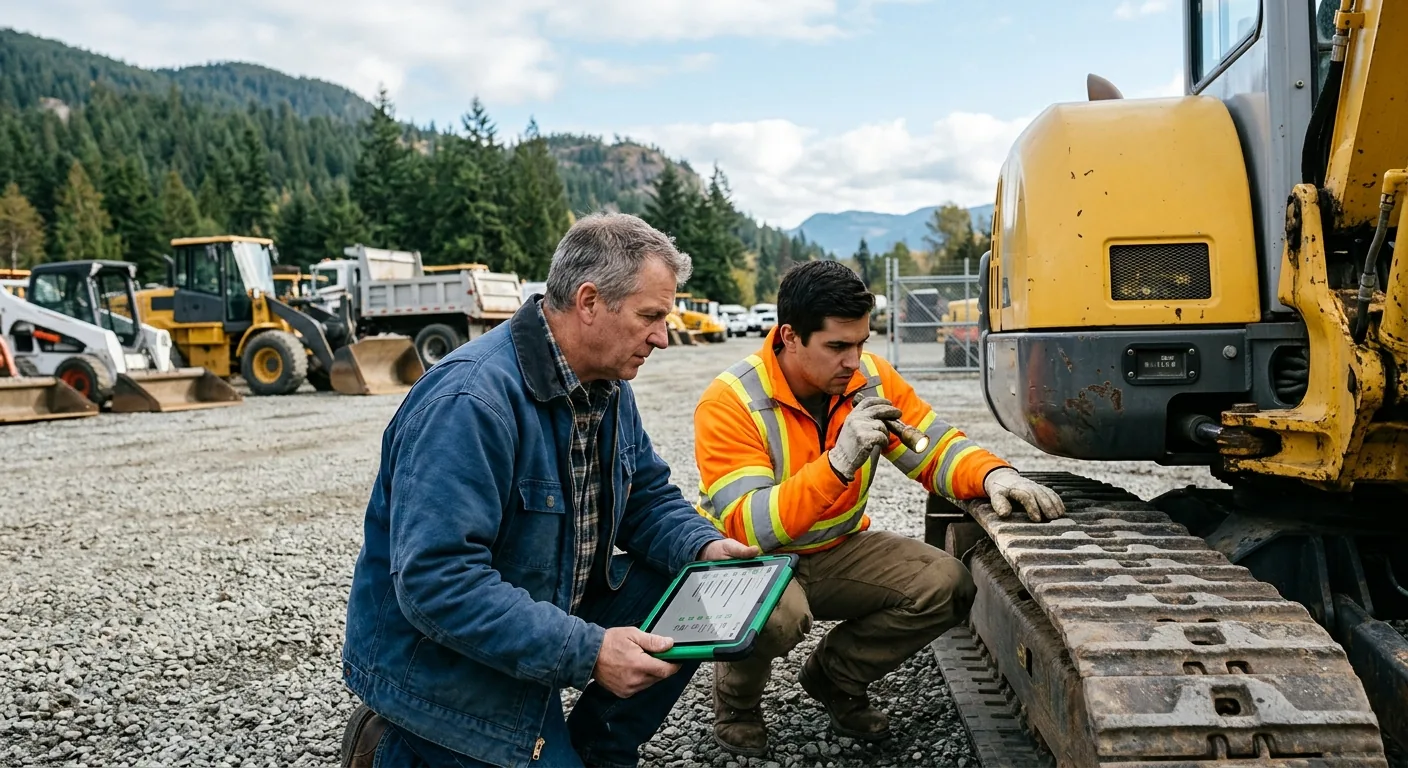
How used equipment financing terms change with age
| Late-model, low hours, common machine | Older, high hours or specialized | |
|---|---|---|
| Advance | Higher share of the price financed | Lower share financed |
| Down payment | Smaller | Larger |
| Term | Longer | Shorter |
| Lender choice | Banks, credit unions and equipment lenders | Fewer lenders, often specialist or alternative lenders |
| Extra checks | Usually minimal | Inspection or appraisal more likely |
Used equipment financing rates follow the same logic. There is no single rate for used equipment: the rate depends on the machine, your credit and time in business, the down payment and the term. Be wary of anyone quoting you a rate before they know those things. To see how term and rate change your payment, try our equipment lease payment calculator.
Buying from a private seller
Private sales are often where the best used equipment deals are, and they are routinely financed. The extra steps protect you and the lender:
- Run a lien search. In BC, a search of the Personal Property Registry shows whether a lender already has a registered claim on the equipment. For most heavy equipment, the search is done against the seller's personal and business names. If you buy equipment with a lien on it, the secured lender can take it from you.
- Make sure the title is clear at closing. If the seller still owes money on the machine, the payout goes to their lender first and the lien is discharged. Lenders usually handle this by paying the seller's lender and the seller directly, rather than sending you the money.
- Get a proper bill of sale showing the price, year, make, model and serial number, signed by the legal owner.
- Have it inspected. There is no dealer warranty on a private sale. A qualified mechanic's report protects you and helps the lender value the machine.
- Record the hours and take photos, including the serial plate and hour meter.
- Ask your accountant about sales tax. Whether GST or PST applies to a private equipment purchase depends on the seller and the asset, so check before you agree on a price.
Used equipment financing for a new business
Newer businesses can finance used equipment, because the machine secures the deal. Expect lenders to look harder at the owner's personal credit and to ask for a larger down payment, and sometimes a guarantor. A sensible down payment and a machine with a strong resale market go a long way.
If you are under two years in business, it can also pay to combine routes: equipment financing for the machine, and a program loan for working capital. Our guides to BDC startup loan requirements and Futurpreneur loans explain the options for newer businesses.
Bad credit and "no credit check" offers
Bruised credit does not rule out used equipment financing. Lenders who work with weaker credit usually offset the risk with a larger down payment, a shorter term, a guarantor or a higher rate. Be cautious with offers advertised as "no credit check" or "guaranteed approval". Legitimate equipment lenders assess the borrower, and the cost of skipping that step usually shows up in the price.
Tax: used equipment can still be written off
Used equipment can qualify for the proposed Productivity Mega Deduction, a 100% first-year write-off, as long as neither you nor a related party owned it before. Our guide to writing off used equipment covers the related-party traps, and leasing vs financing equipment explains why the structure decides who claims the deduction. Already own the equipment and need cash? A sale and leaseback can release it.
Six steps to finance a used machine without losing the deal
1. Get pre-qualified before you shop
Knowing your approval range, down payment and the age limits that apply to you means you only chase machines you can actually finance.
2. Find the machine and get a written quote or draft bill of sale
Include the serial number, year, hours and price. Ask how long the price holds. Good used machines sell quickly and quotes expire.
3. Inspect it
Especially on private sales and older units.
4. Confirm clear title
Lien search, and a payout letter if the seller still owes money on it.
5. Submit once, to the right lenders
One complete application placed with lenders that actually finance that machine, at that age, for a business like yours. Repeated applications to different lenders slow things down and make sellers nervous.
6. Close and fund
Sign the financing documents, the lender pays the seller (and any lienholder), and you take delivery.
Why a broker helps most on used equipment
On a new machine at a brand dealer, the manufacturer's captive finance company usually has the best offer, and you may not need a broker at all. Used equipment is different. Age limits, private-sale rules, appetite for older or niche machines and tolerance for newer businesses vary widely between lenders, and the lender that says no to a 12-year-old loader may be the wrong lender, not the wrong deal.
Canada Business Loan Experts works with 30+ lenders, including banks, credit unions, equipment finance companies and alternative lenders. We take one complete application, match the machine and your business to lenders that finance it, and handle the private-sale steps so the deal closes before the seller moves on. See our equipment leasing and financing page for more.
Used equipment financing FAQ
Can I finance used equipment?
Yes. Used equipment from dealers and private sellers is regularly financed in Canada with loans and leases. Compared with new equipment, expect a shorter term, a larger down payment on older or high-hour machines, and more documentation about the machine itself, such as the serial number, hours, condition and proof of clear title.
How old can equipment be to get financing?
There is no universal age limit. Each lender sets its own, and many look at the machine's age at the end of the term rather than today. Hours, condition, service history and how easy the machine is to resell also matter, so an older machine with low hours and a strong resale market can still be financeable.
Can I finance equipment bought from a private seller?
Yes. Private-sale equipment is routinely financed. The lender will usually want a lien search to confirm clear title, a bill of sale showing the price, year, make, model and serial number, and sometimes an inspection. If the seller still owes money on the machine, the lender typically pays out the seller's lender directly at closing.
What are used equipment financing rates?
There is no single rate. Used equipment financing rates depend on the machine's age, hours and resale value, your credit and time in business, the down payment and the term. A reliable quote needs those details, so be cautious of rates offered before a lender has seen them.
Can a new business get used equipment financing?
Yes. Because the equipment secures the financing, newer businesses can qualify. Lenders typically look more closely at the owner's personal credit and may ask for a larger down payment or a guarantor. Choosing a common machine with a strong resale market also helps.
Is there used equipment financing with no credit check?
Legitimate equipment lenders assess the borrower, including credit. Businesses with weaker credit can still be approved, usually with a larger down payment, a shorter term, a guarantor or a higher rate. Offers advertised as "no credit check" or "guaranteed approval" deserve extra caution, because the risk usually shows up in the cost.
Financing for used equipment, matched to the right lender
Dealer or private sale, late-model or older. One application, 30+ lenders, all credit profiles considered. No obligation.
Would rather talk it through first? Call (604) 762 7350 or book a call.
General information, not financial, tax or legal advice. Lender criteria vary and change. Approval and terms depend on the lender's assessment of the equipment and your business.
